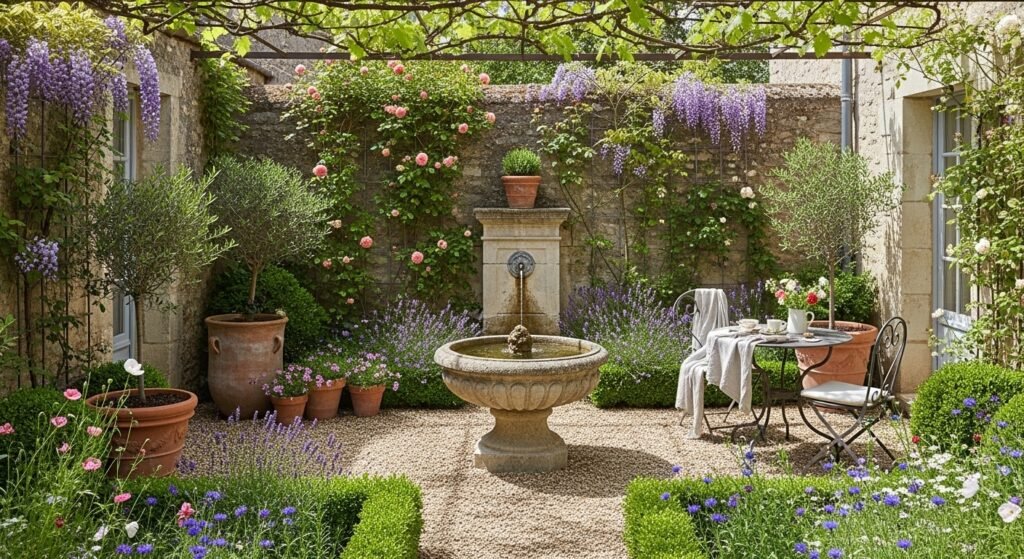
I stared at a square of paving that looked unsure of itself. The plants felt random. The seating looked like leftover furniture.
I wanted a courtyard that read as calm and lived-in. Not fussy. Not like a showroom.
I learned that small, steady choices make a courtyard feel complete. You don’t need to overhaul everything.
How to Design a French Courtyard Garden for Maximum Charm
This is the method I use when a courtyard feels unfinished. You’ll learn how to shape balance, place plants and seating, and end with a warm, lived-in space anyone can enjoy.
What You’ll Need
- 2-person wrought iron bistro set (black)
- Unglazed terracotta pot set (3 sizes)
- Lavender plants or seeds (French lavender)
- Boxwood small topiary (artificial or live)
- Climbing rose (compact variety)
- Weatherproof outdoor mirror (antique finish)
- Gravel or pea stone for edging (natural color)
- Iron lanterns with glass panels (medium)
Step 1: Anchor the space with a focal point
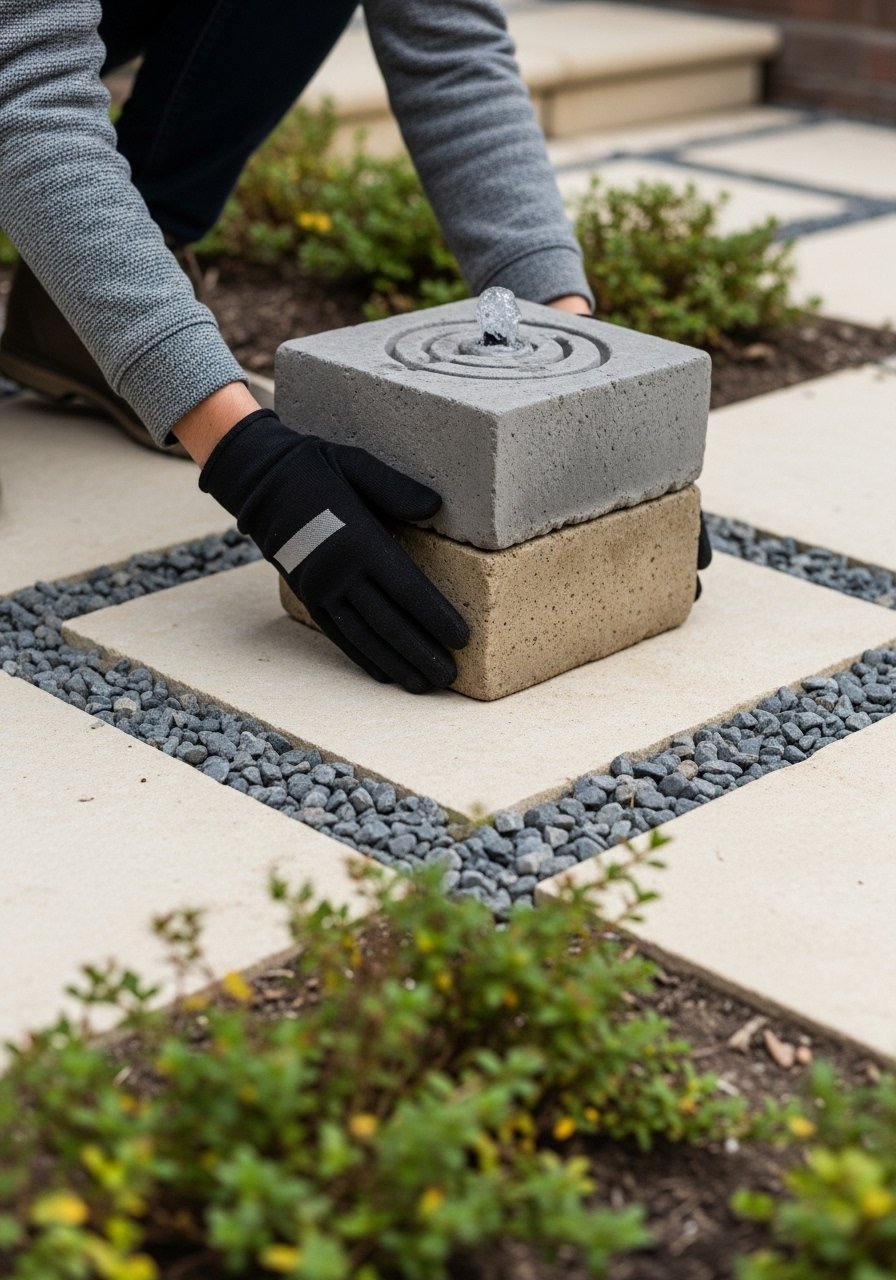
I always start with one strong object at the center or against a wall. A small fountain, a large terracotta urn, or a round bistro table becomes the eye’s resting place. That single anchor makes the rest of the courtyard read as intentional.
Visually, the yard feels grounded. Paths and plants now curve toward something. This is the simplest way to turn clutter into composition.
People often miss scale. Too-small anchors disappear. One mistake is choosing something ornate that fights the plants. Keep the anchor simple and durable.
Step 2: Define hard edges and paths for calm flow
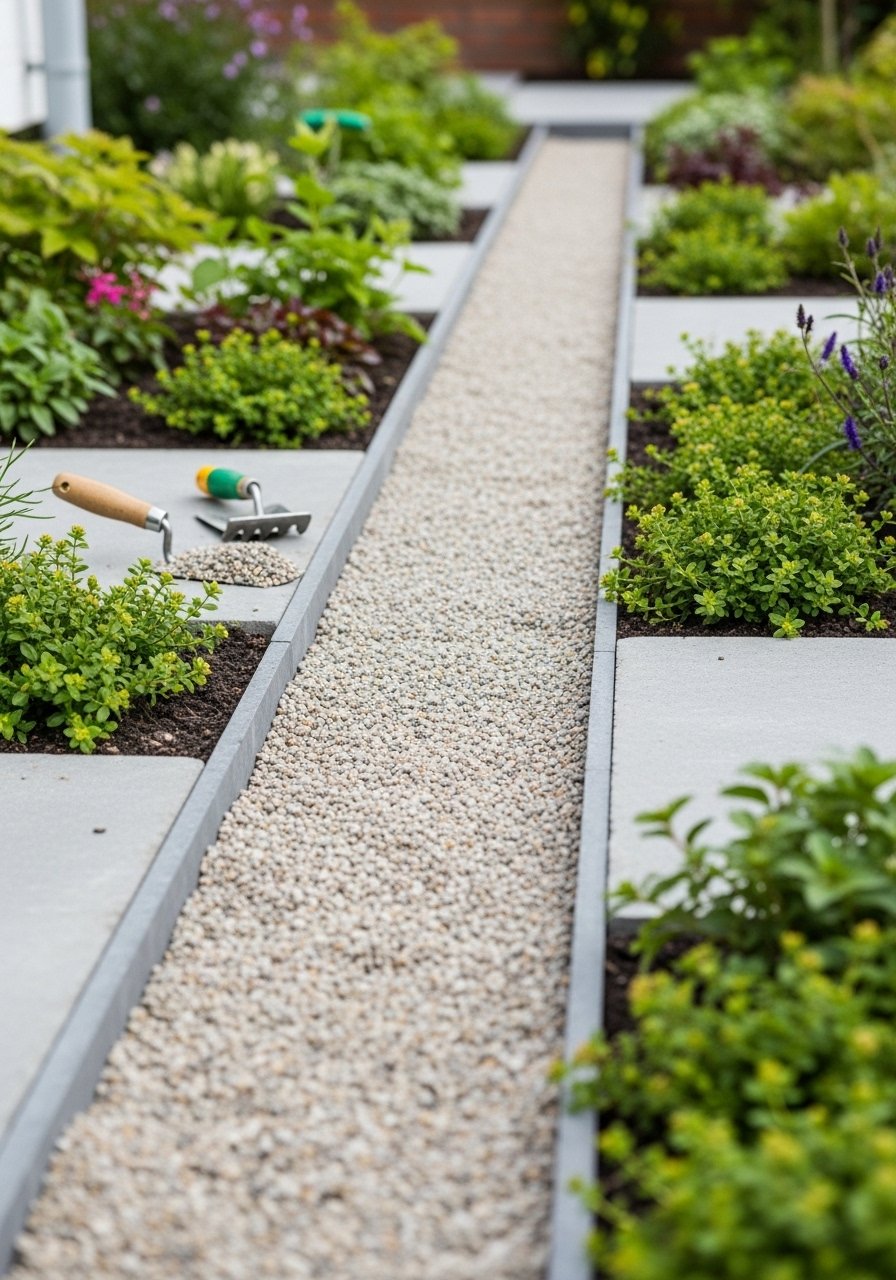
I shape where feet will go before adding much else. A narrow gravel edge, a single stepping-stone line, or a small paved sweep tells visitors how to move. I favor soft curves in a small courtyard; they make the space feel larger and more relaxed.
Once edges are in, plantings look deliberate instead of accidental. Paths also help soil and plants breathe.
Many people underestimate proportion. A path that’s too wide eats space. Avoid overly straight, rigid lines in small courts—those can make the area feel boxed in.
Step 3: Layer low, mid, and climbing plants for depth
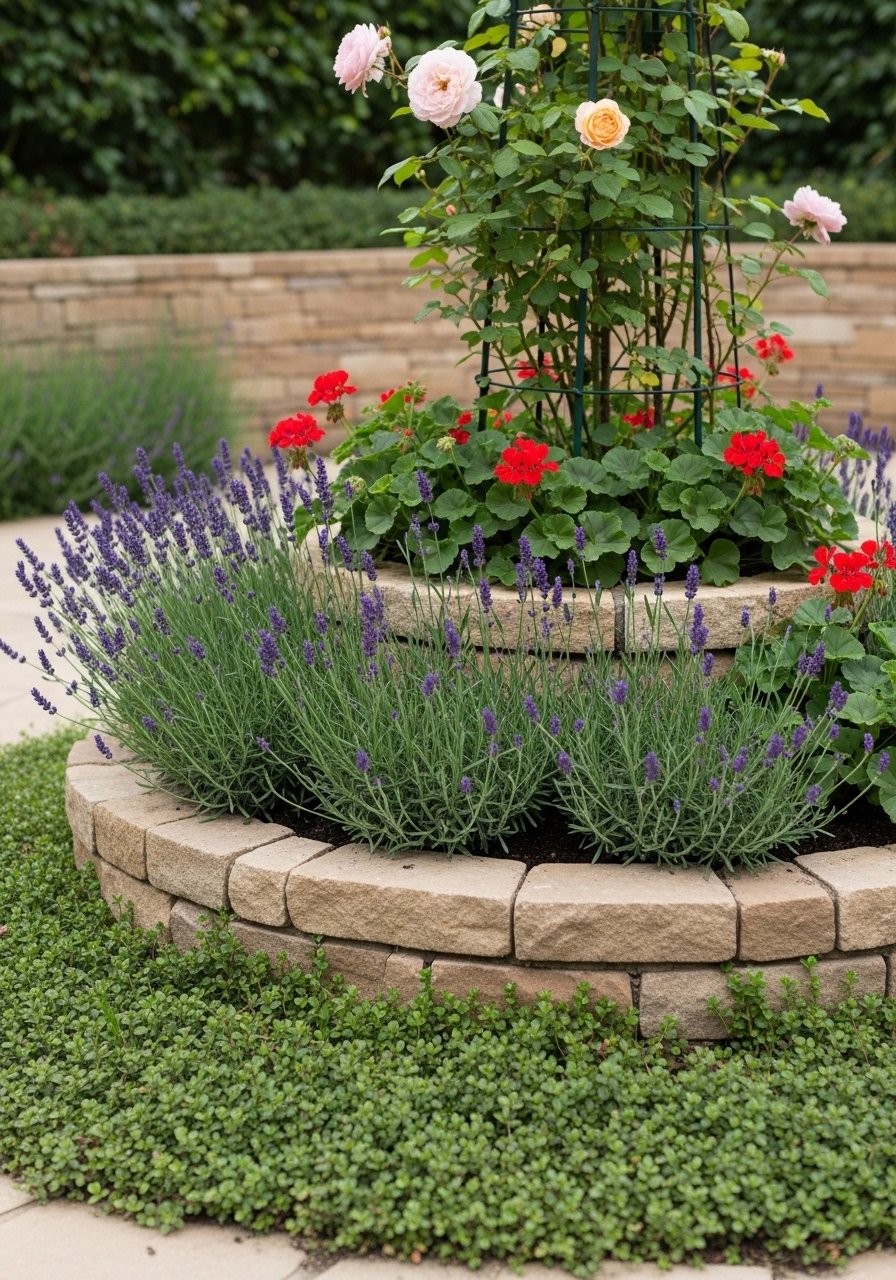
I build the bed like a short story: groundcover, then mid-height herbs and perennials, then a climbing plant against a wall. Lavender or geraniums give scent and color at mid-level while a climbing rose or jasmine writes upward.
The courtyard gains depth and scent. Layers hide hardscapes and soften corners.
A common miss is planting everything the same height. Also, don’t crowd climbers at the base—give them and the wall space to breathe.
Step 4: Place containers and repeat simple motifs
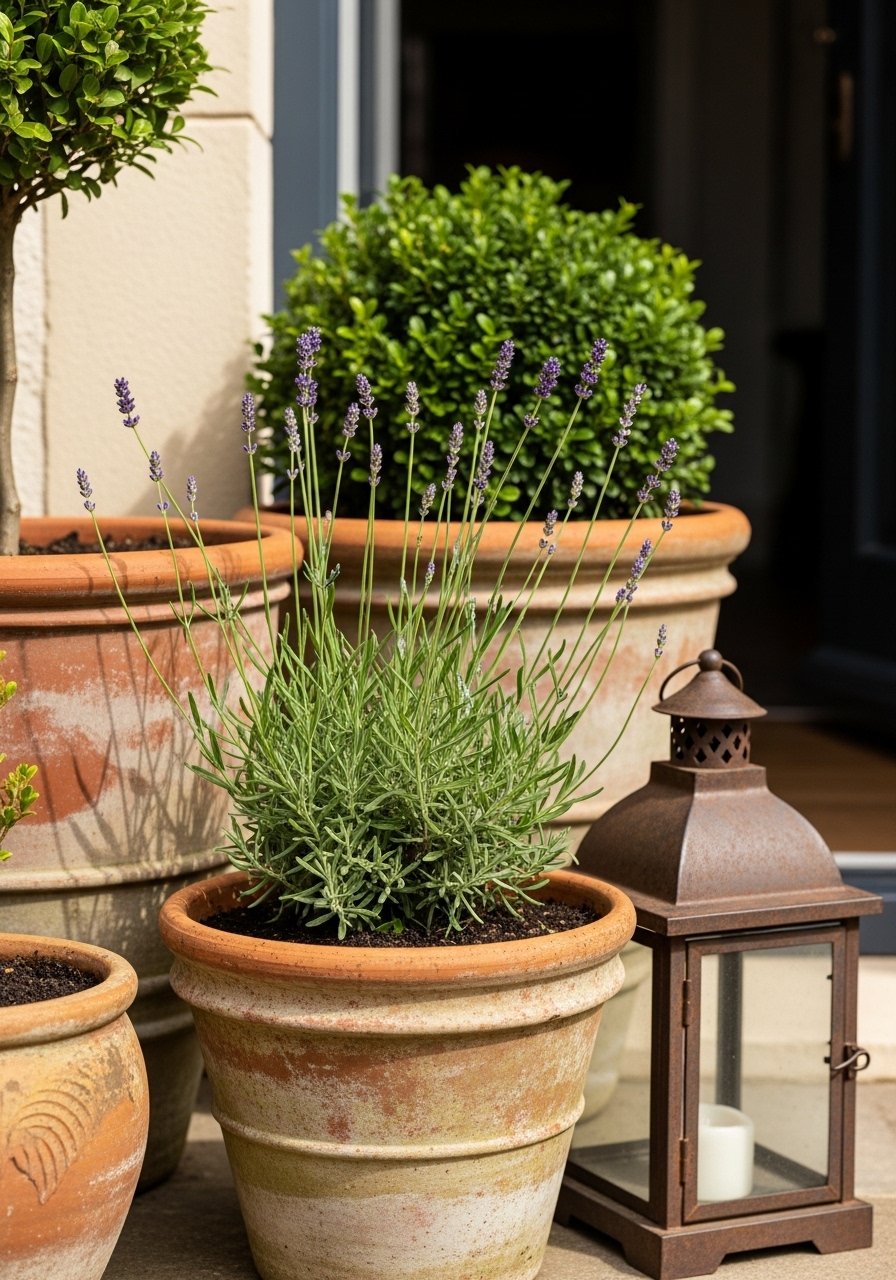
I use terracotta pots and a pair of matching topiaries to repeat shapes and color. Group three pots of different sizes near a doorway or corner. Repeat the same pot or lantern style twice or thrice around the court to create rhythm.
This makes the courtyard feel curated, not cluttered. Repetition ties mixed plants and furniture together.
People often scatter unmatched containers. A small mistake is overfilling pots. Leave negative space; breathing room looks intentional.
Step 5: Add seating, mirror, and soft light for living appeal
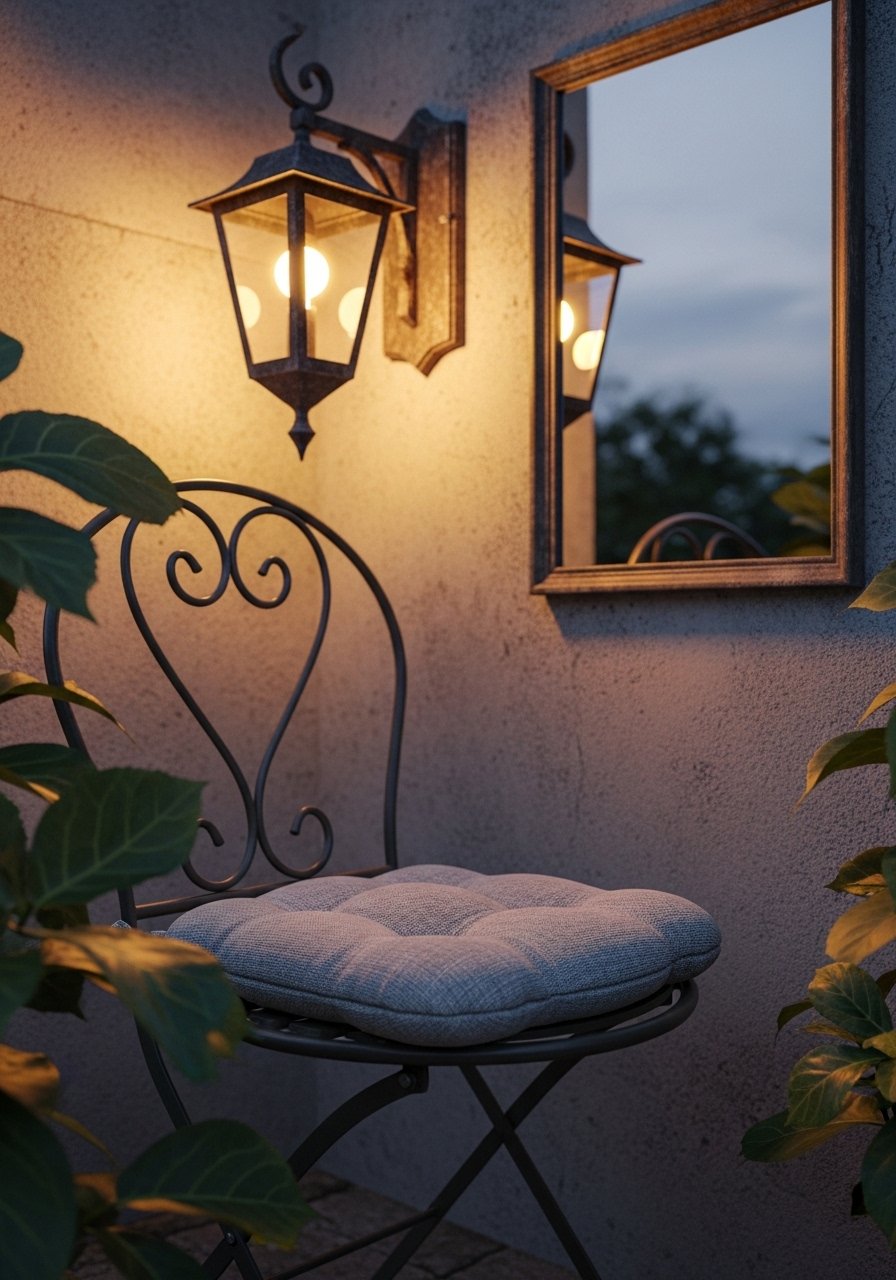
I think about where I’ll sit first. A two-person bistro set fits most courts and gives good scale. I hang a weatherproof mirror on a wall to bounce light and visually widen the space. In the evening, iron lanterns or a small string of warm bulbs finish the mood.
The courtyard shifts from garden to living room. It invites lingering.
A common oversight is seating that blocks flow. Don’t place chairs in the main path. Avoid too-bright lights that make a cozy spot feel harsh.
Plant Palette & Pairings
I stick to a small palette: two structural evergreens, two scented shrubs, and a few seasonal perennials. That keeps the courtyard coherent through the year.
My favorites: boxwood for year-round shape, lavender for scent and color, and a compact climber like a single-flowered rose. I pair textured foliage with soft blooms.
Quick pairings I use:
- Boxwood + lavender
- Climbing rose + trailing geranium
- Olive or bay in a pot for height
Materials, Color, and Texture
I choose warm, muted materials: terracotta, aged stone, and dark iron. Those tones read as calm and cohesive together.
Texture is as important as color. Rough stone, soft lavender, glossy topiary leaves—these contrasts make the space feel layered.
A simple rule: limit your palette to three materials and repeat them around the courtyard.
Seating, Scale, and Flow
Scale is everything in a small courtyard. I prefer compact furniture and narrow pathways that suggest movement.
I place seating where it can pause—near a focal point or under a climbing plant. That makes sitting feel private even in a small space.
Keep the main path clear and allow at least one spot to stand back and look at the whole court.
Final Thoughts
Start with one change: anchor, path, or a set of pots. I often change just that and live with it for a season before doing more.
Courtyards grow into themselves. Small, consistent choices build a confident, comfortable space.
If you work slowly and look from the doorway, the courtyard will end up feeling like it’s always belonged there.