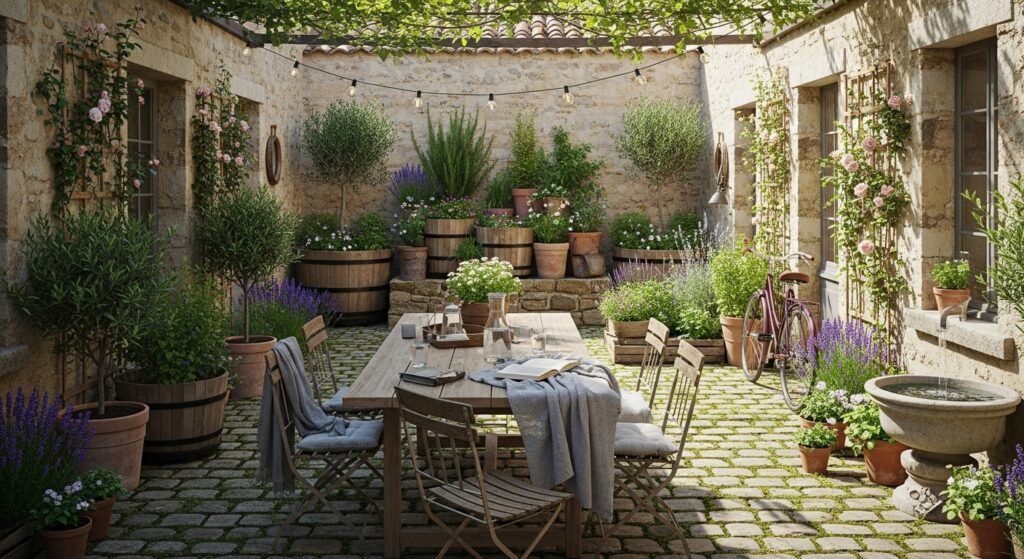
I used to stare at a small, awkward side yard and wonder why it never felt finished.
Pavers looked fine. The plants felt tentative. Guests sat, then shuffled.
I wanted a courtyard that felt calm and comfortable without fuss. This is about feeling, balance, and a few steady choices.
How to Create a French Courtyard Patio That Feels Luxurious
This is the method I use every time a garden feels unfinished. You’ll learn how to make a small courtyard read as calm, balanced, and quietly luxurious without complicated work.
What You’ll Need
- weathered metal bistro set (26-inch, dark green)
- terracotta planters (12-inch, classic clay)
- boxwood topiary (24-inch, round, evergreen)
- globe outdoor string lights (warm LED)
- black metal outdoor wall lantern (matte finish)
- 4×6 outdoor rug (flatweave, natural jute look)
- metal climbing trellis (arched, dark bronze)
Step 1: Define the room with ground and a rug
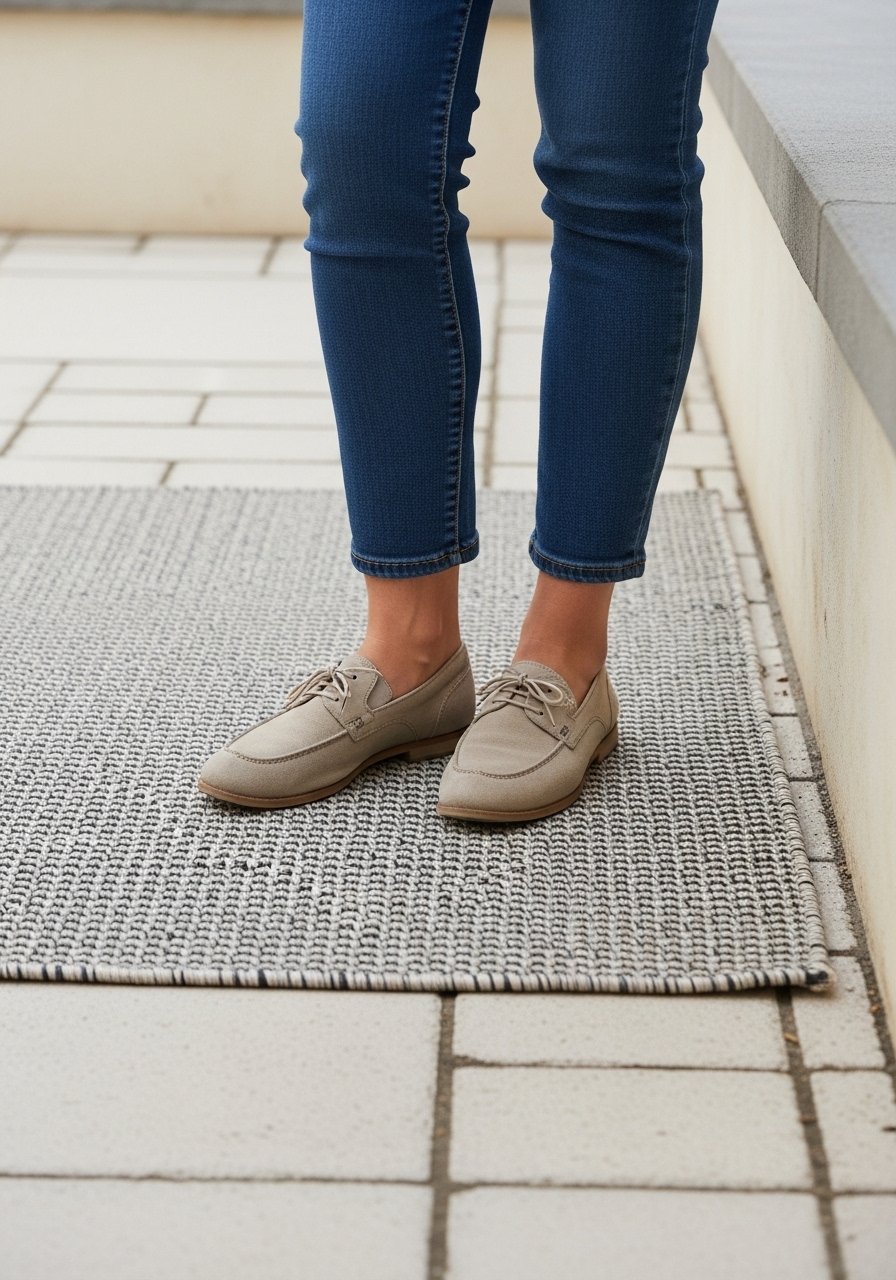
I start by thinking of the courtyard as a room. A neutral paving plus a 4×6 rug pulls everything together. It makes paving read as intentional rather than accidental. Visually, the rug settles the seating and gives the eye a place to rest. People often miss how a small rug can change scale. Avoid a rug that’s too bright or patterned; it competes with plants and stone and steals the calm.
Step 2: Place seating to create gentle circulation
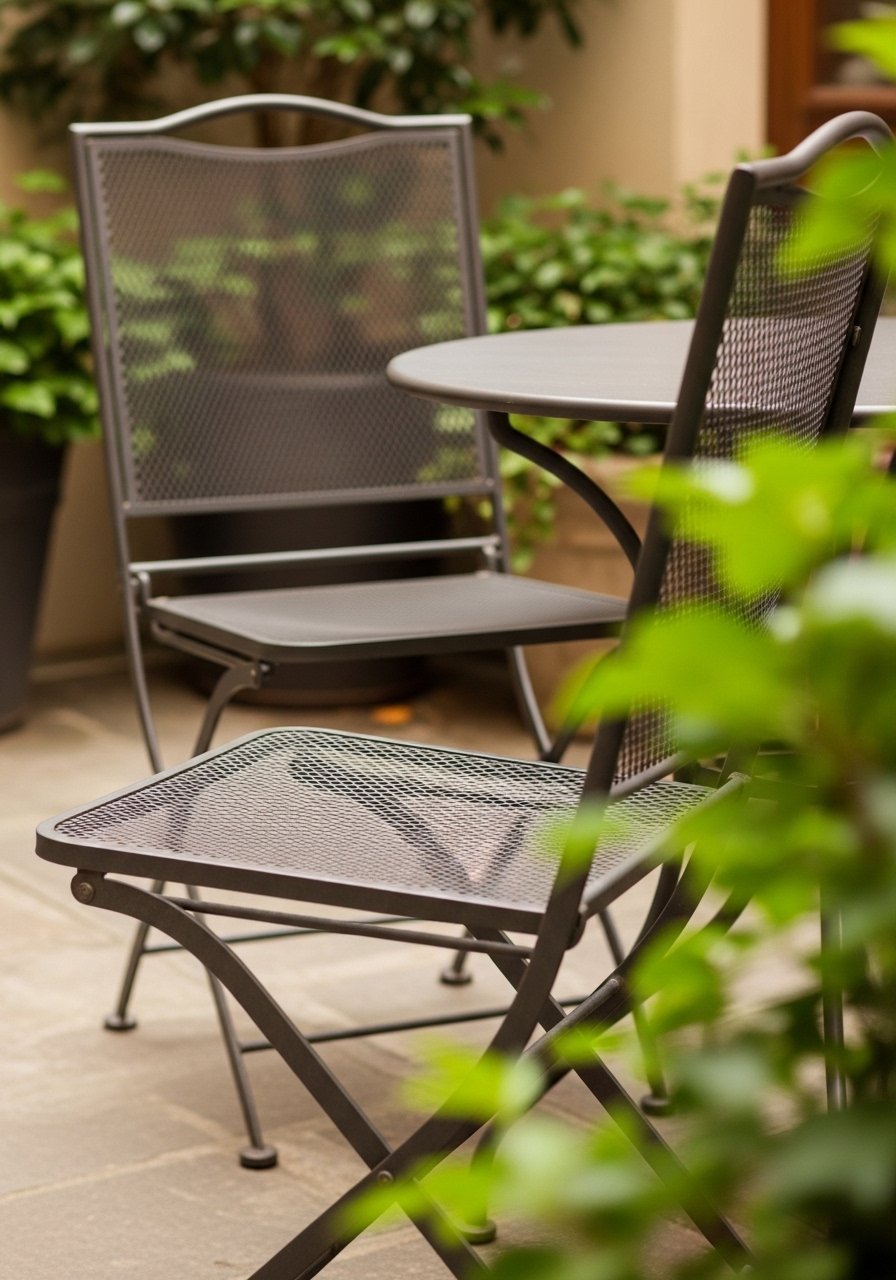
I place a small bistro set where people naturally move and pause. I leave a clear path and angle one chair slightly toward a focal plant or fountain. That subtle angle invites sitting. The space changes from static to lived-in. Most people shove furniture flush to the wall; that makes the area feel narrow. Don’t crowd the seating—give it shoulder room so it breathes and looks intentional.
Step 3: Group pots for layered greenery and form
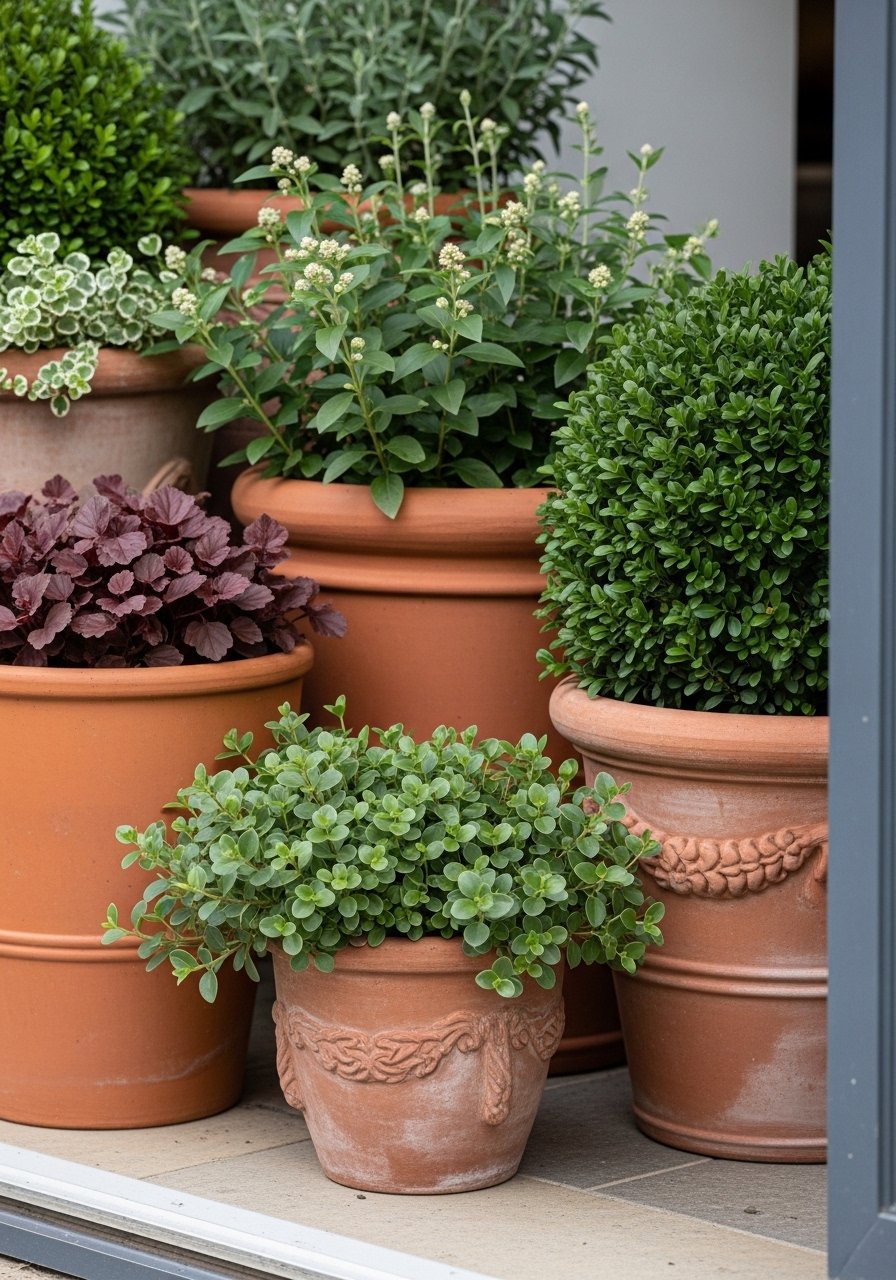
I group terracotta pots at different heights and sizes, then add a boxwood topiary for structure. The warm clay and evergreen shape give the courtyard that French restraint. Visually the pots create depth and a soft edge to hard paving. One insight: repetition matters more than variety—repeat the same pot or plant to read as deliberate. A common mistake is scattering many unmatched pots; it reads cluttered rather than curated.
Step 4: Anchor verticals with a trellis and lanterns
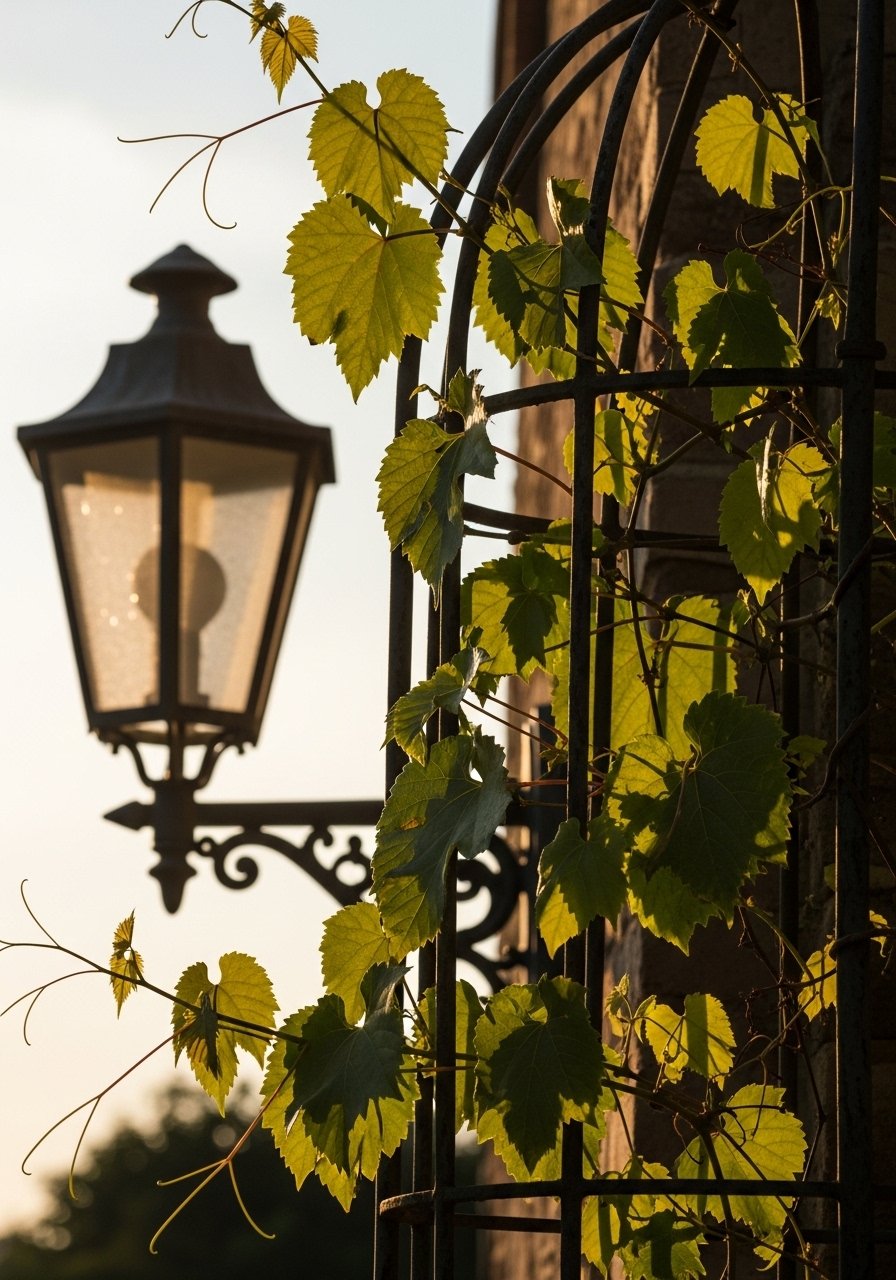
I add a climbing trellis and a single wall lantern to lift the eye. Vertical elements enclose the space gently and make it feel intimate. A trellis with a vine or trained ivy softens the wall and gives height without fuss. People often forget to balance vertical weight—too many tall things makes it heavy. Avoid planting aggressive climbers that will overrun the small scale; choose tidy vines and prune for shape.
Step 5: Layer low lighting and small accents for mood
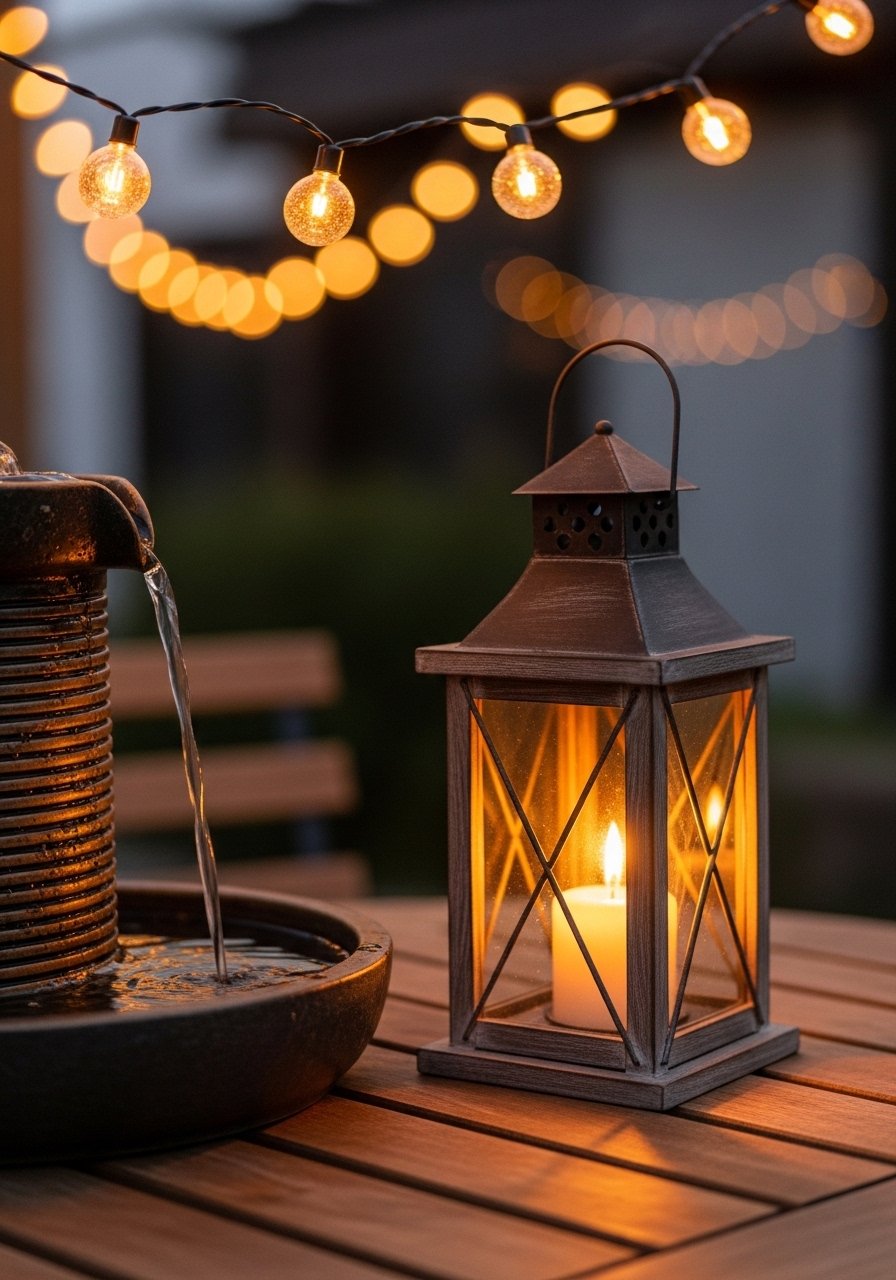
I finish with warm string lights, a tabletop lantern, and a small fountain or water bowl. Layered low light reads as intentional luxury. It softens shadows and makes the courtyard usable after dusk. One insight is that low, warm sources feel more luxurious than a single bright light. A mistake I see is relying only on overhead bulbs; they flatten texture and kill the cozy feel. Keep lighting dim and layered for a comfortable evening.
Choosing plants for a French feel
Choose a restrained palette. Lavender, rosemary, a small olive or trained pear, and boxwood bring that French character. I stick to three or four repeated species for calm repetition.
Use texture more than color. Grey-green foliage plus neat clipped forms feels cultured and relaxed. Let scent do some of the work—roses or lavender nod to the south of France.
Balancing hardscape and soft textures
Hard surfaces set the bones. Stone, gravel, or simple pavers give weight. I counter that with woven cushions, a jute-look rug, and clay pots to warm the scene.
Aim for contrast in scale. Small paving stones and larger pots create rhythm. Avoid overloading with furniture—negative space is part of the composition.
Lighting and evening mood
Start with low pools of light near seating and a soft wash on a wall or plant. String lights and a lantern create layers that feel personal and lived-in.
Keep bulbs warm and dimmable where possible. I think in small glows, not broad beams—this is how a courtyard becomes comfortable after dark.
Final Thoughts
Start with one corner you can sit in. Make that spot deliberate and comfortable.
Work slowly—add a pot, a lantern, a string of lights. Each choice should calm the eye.
You don’t need lavish things. You need restraint, repetition, and a few warm touches.