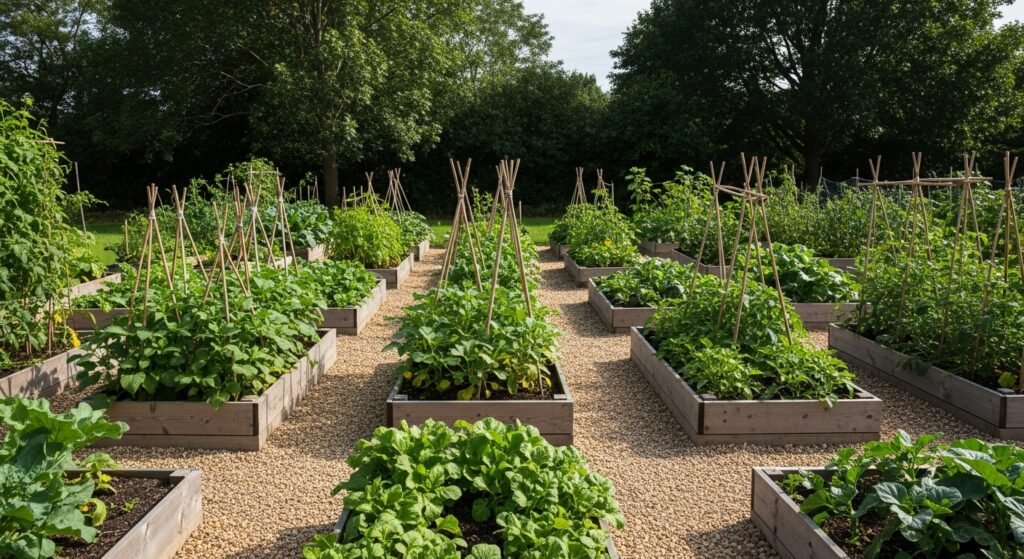
I had a sunny corner in my yard that stayed bare. Tomatoes went in the ground once, but the soil was rocky and nothing grew right. Raised beds fixed that for me. They let veggies thrive where ground planting failed.
Now my beds feel right—full, balanced, easy to reach. No more bending over weeds or thin harvests.
You can do this too. It starts with placement that works for you.
How to Do a Raised Vegetable Garden
This is the way I set up raised vegetable gardens that actually produce. You’ll end up with beds full of steady veggies, balanced and easy to tend.
What You’ll Need
- 4×8 raised garden bed kit, cedar wood
- organic garden soil mix, 1.5 cubic feet bag
- compost manure blend, 40 lb bag
- vegetable seed starter kit, heirloom tomatoes and lettuce
- bamboo garden stakes, 3 ft pack of 20
- organic mulch straw, 3 cubic feet bale
- galvanized watering can, 2 gallon
- landscape fabric weed barrier, 4×50 ft roll
Step 1: Pick Your Spot

I walk my yard mid-morning. Sun hits full for six hours? That’s my spot. Near the path, not tucked away. It feels open, easy to reach without stepping on plants.
Visually, the area quiets down. Bare dirt turns purposeful. Insight most miss: wind blocks matter—fence or house nearby cuts dry-out. Mistake to dodge: shade from trees. Veggies sulk there.
I mark it with stakes. Balance comes first.
Step 2: Lay the Base

I clear weeds, roll out fabric. It blocks grass without chemicals. Bed frame goes square on top. Feels stable, like it belongs.
The ground shifts from wild to contained. Edges crisp up. People forget drainage—slight slope lets water move. Don’t skip fabric; weeds poke through later.
Now it waits for fill. Steady start.
Step 3: Fill and Mix Soil
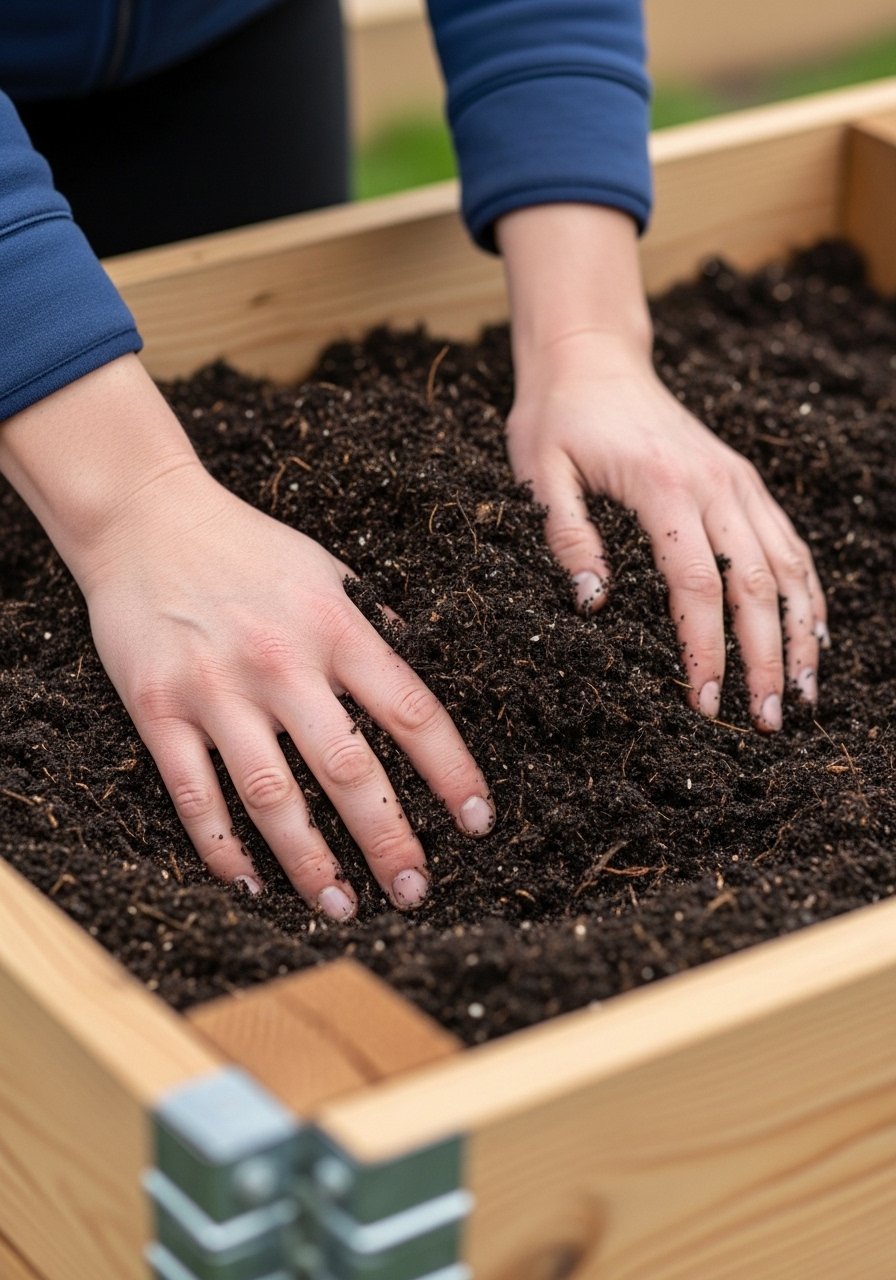
I layer soil and compost, half-and-half. Shovel it in, mix by hand. Moist, crumbly feel—not packed mud. Bed settles even.
Color deepens, dark and rich. Veggies root deep here. Miss this: too much soil alone compacts. Avoid pure dirt; it starves plants.
Feels alive already.
Step 4: Plant with Flow
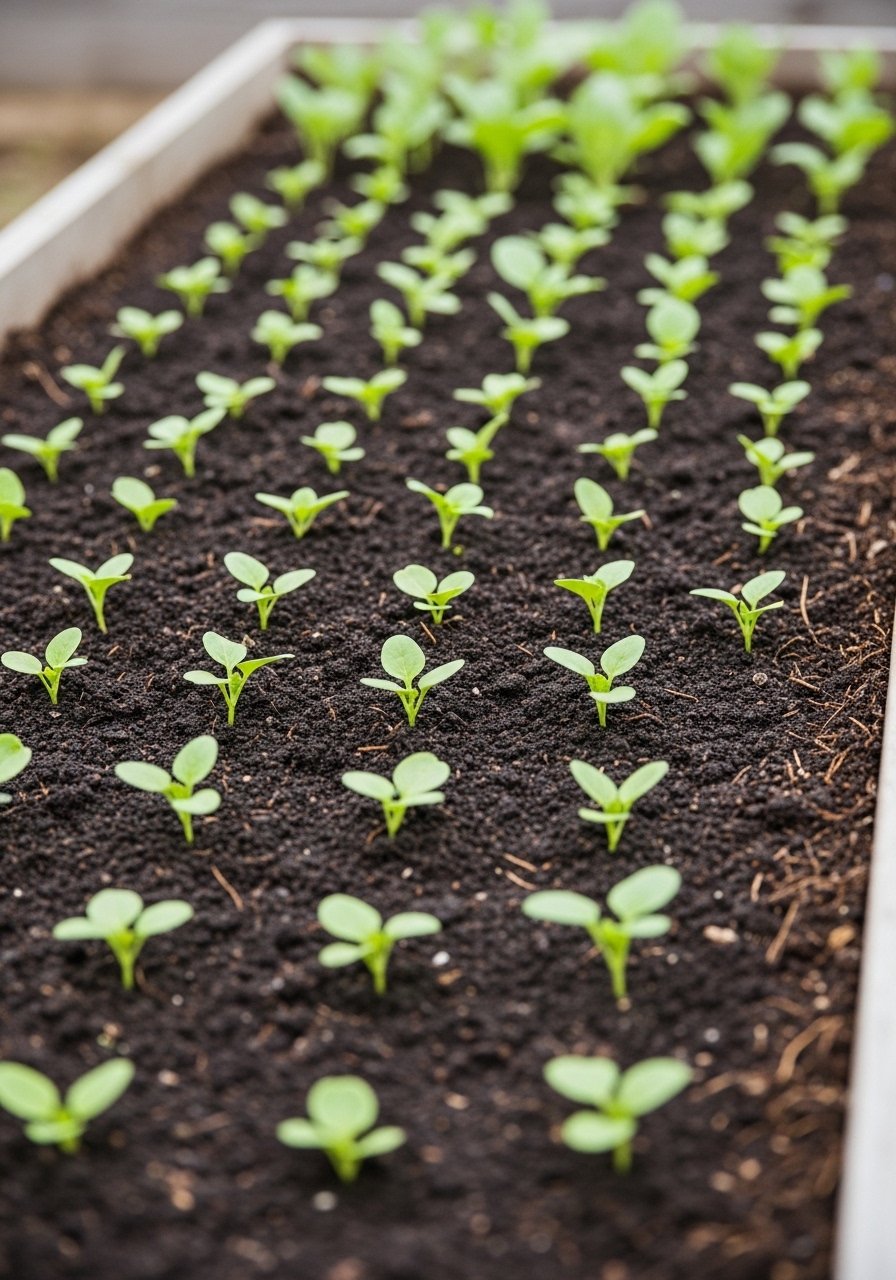
I place tall tomatoes at back, lettuce up front. Space for air—crowding breeds rot. Hands in soil, eyes on balance.
Greens pop against dark earth. Layout breathes. Insight: succession plant—sow lettuce every two weeks. Don’t plant all at once; harvests drag.
It greens quick.
Step 5: Add Supports and Mulch
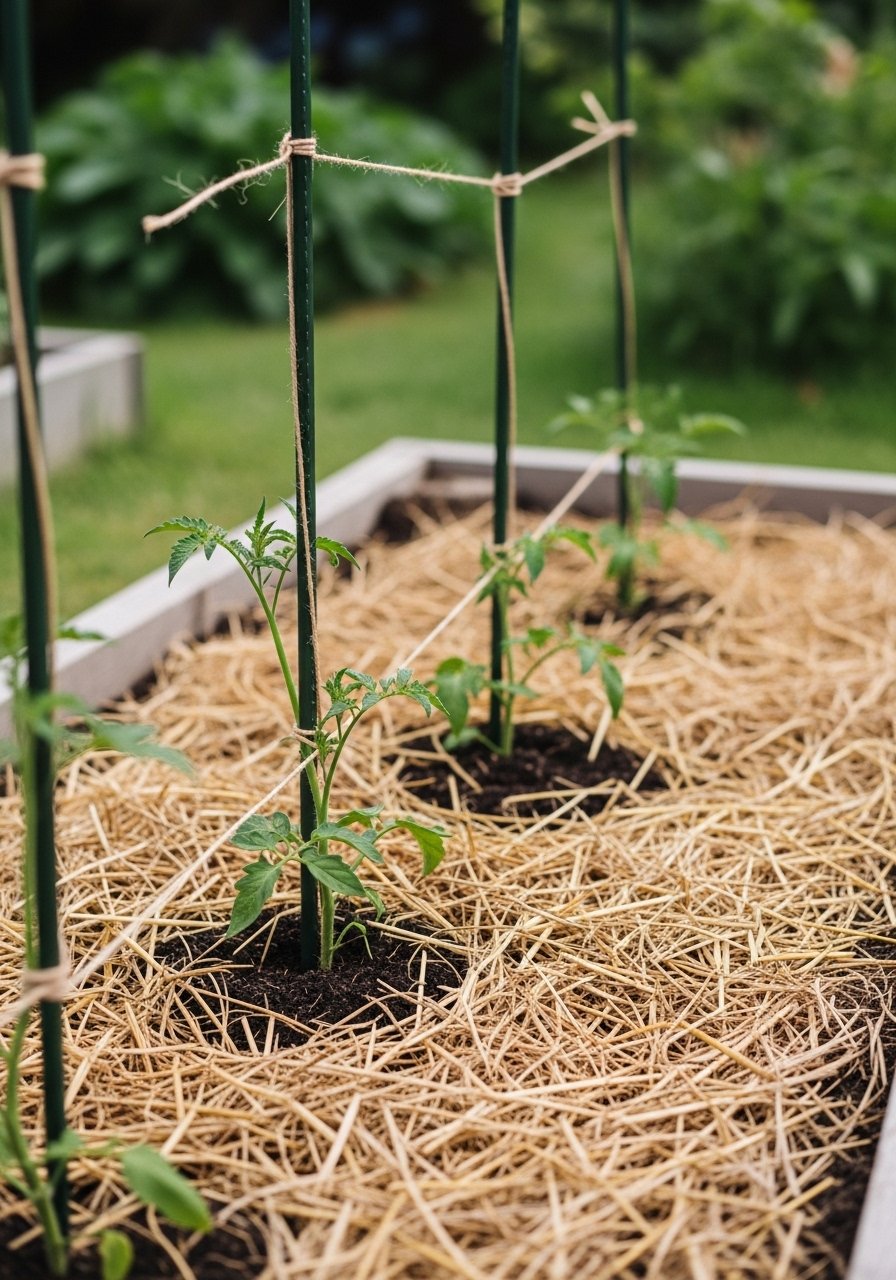
Stakes go in early for vines. Mulch tops soil, keeps wet even. Light layer—no mountain.
Bed looks finished, layered. Suppresses weeds I’d pull otherwise. Common skip: mulch timing—too soon smothers sprouts. Avoid heavy hand.
Water gentle. Ready.
Choosing Vegetables for Balance
I pick what grows easy in my zone. Tomatoes, beans, greens fill space without overwhelm.
Start simple:
- Bush beans for quick fill.
- Leafy lettuce for front edge.
- One tomato variety, staked.
Mix heights. Tall back, low front. Bed feels full, not sparse. Rotate yearly—soil stays healthy.
Handling Common Garden Pests
Pests show up. I spot aphids early on leaves.
Natural fixes:
- Hose spray, strong water.
- Ladybugs released nearby.
- Neem oil if needed, diluted.
Check undersides daily. Balance bugs with plants. No chemicals—taste stays clean.
Year-Round Care Tips
Raised beds dry faster. I water deep, mornings.
Feed compost monthly. Pull spent plants, replant.
Winter: cover with straw. Springs back strong. Keeps it going.
Final Thoughts
Start with one bed. Watch it fill, harvest steady.
You’ll see what works in your dirt, sun.
It’s just tending what’s yours. Simple as that.