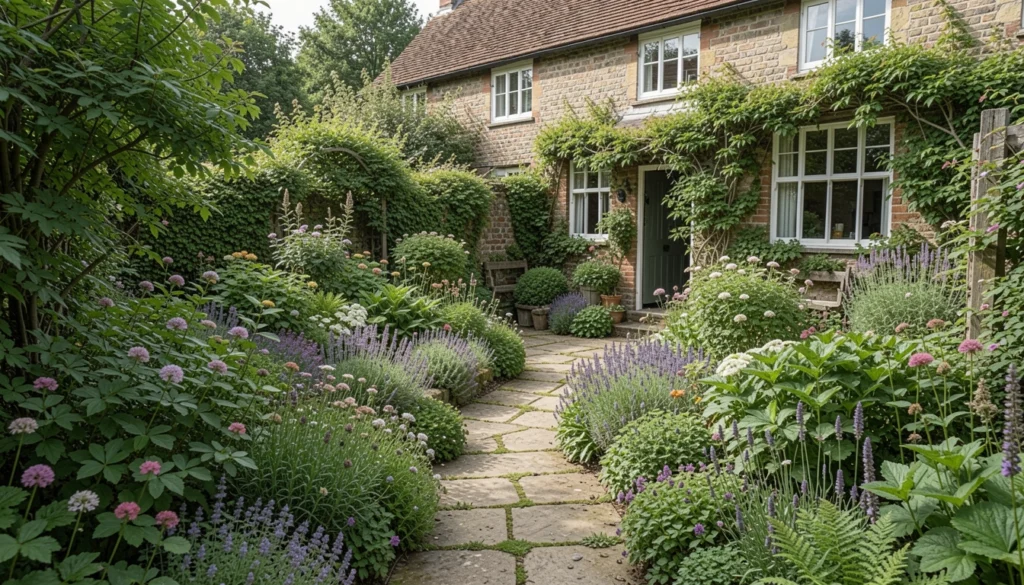
I had this sunny bed by the path. It felt stiff. Just a few roses, nothing connecting them. Walked by it every day, and it never pulled me in.
One summer, I changed it. Started noticing what worked. The garden softened. It invited closer looks now.
You can do this too. It’s about layers that settle right.
How to Design an English Cottage Garden
This is the way I shape any cottage garden. You’ll end up with a space that flows naturally, full and balanced from spring through fall.
What You’ll Need
- Biennial foxgloves
- Tall delphiniums
- Lavender plants
- Climbing roses
- Hardy geraniums
- Hollyhocks
- Sweet peas
- Obelisk trellis
Step 1: Anchor with Tall Backbone Plants
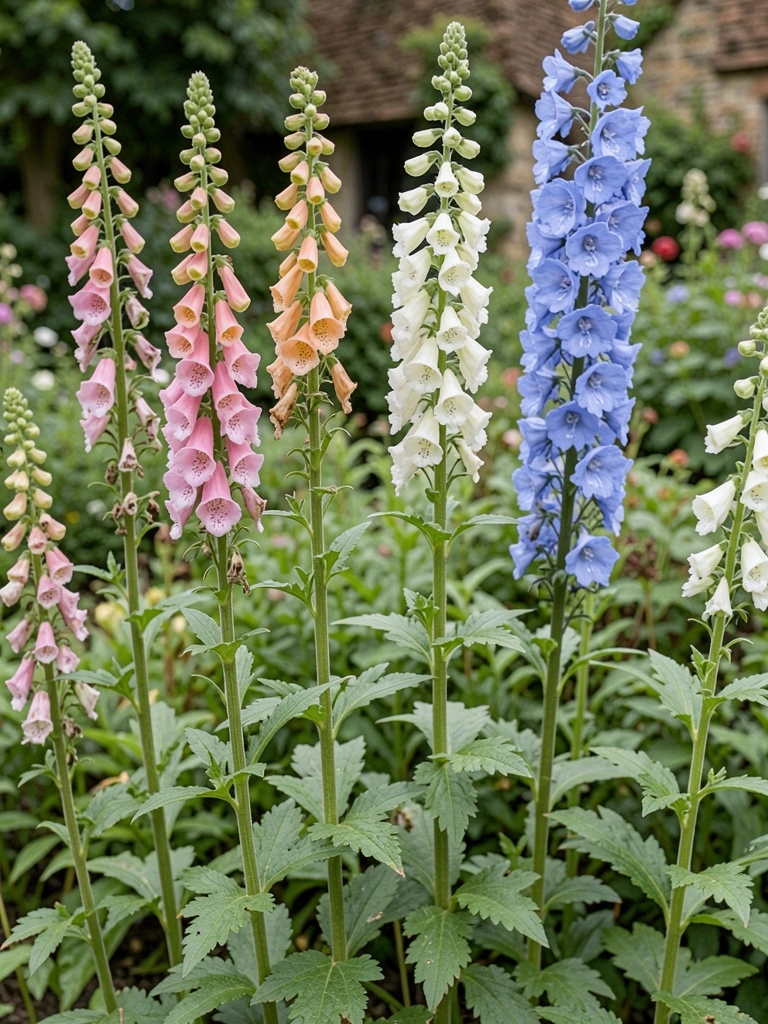
I start at the back. Plant tall ones like foxgloves and delphiniums. They give height without crowding forward.
The bed changes right away. It has depth now. Feels like it reaches up, draws your eye back.
People miss how these sway in wind. They add quiet movement. Don’t plant them too straight—offset a bit for flow.
Skip rigid lines. Cluster in threes. That keeps it loose.
Step 2: Layer Mid-Height Fillers
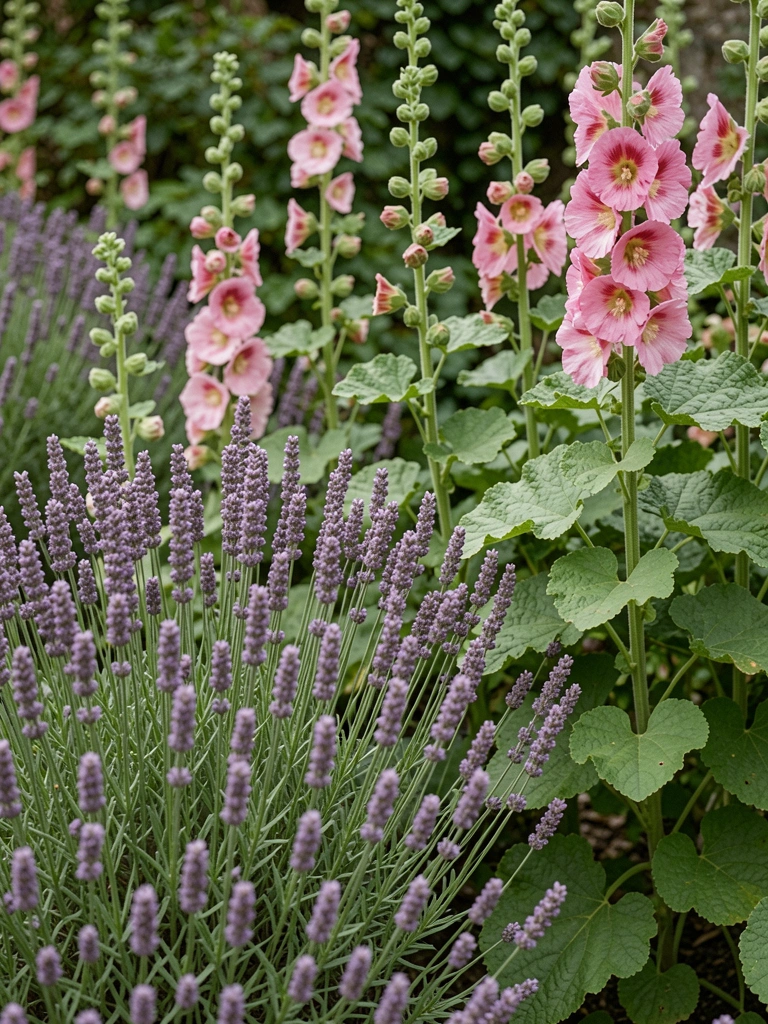
Next, I add lavender and hollyhocks mid-way. They bridge tall to low. Tuck them where gaps show.
Visually, it fills out. No bare legs under the heights. The whole bed reads balanced.
Most forget scent here. Brush by lavender—it releases calm. Place near paths for that.
Avoid matching heights exactly. Vary by a foot. Lets air move, prevents flop.
Step 3: Weave in Climbers for Vertical Flow
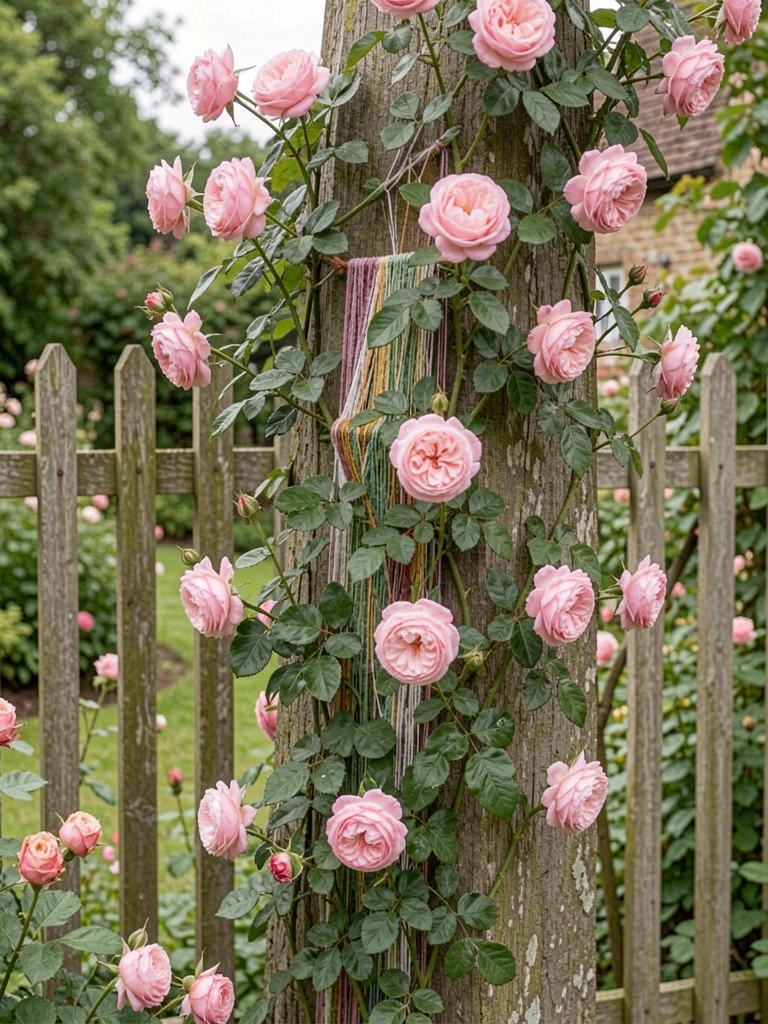
I train climbers like roses up an obelisk or fence. They pull the eye up soft.
Now it spills over edges. Feels connected, not boxed.
Insight: climbers hide fences fast. Pick repeat bloomers for season length.
Don’t overload one spot. Space two feet apart. Gives room to breathe.
Step 4: Ground with Low Spreaders
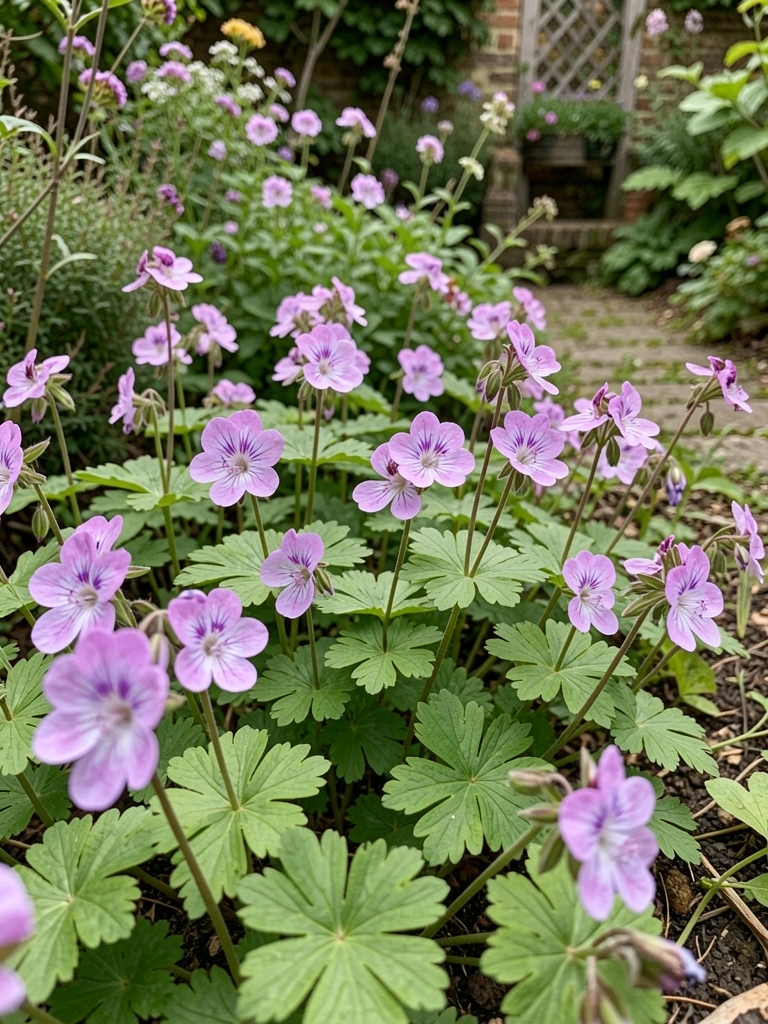
Low ones like geraniums go front. They soften edges, cover soil.
The bed settles. No mud visible. Feels finished, walkable.
Folks overlook how they knit everything. Roots hold soil too.
Steer clear of too many colors here. Blues and pinks blend best.
Step 5: Scatter Annuals for Color Pops
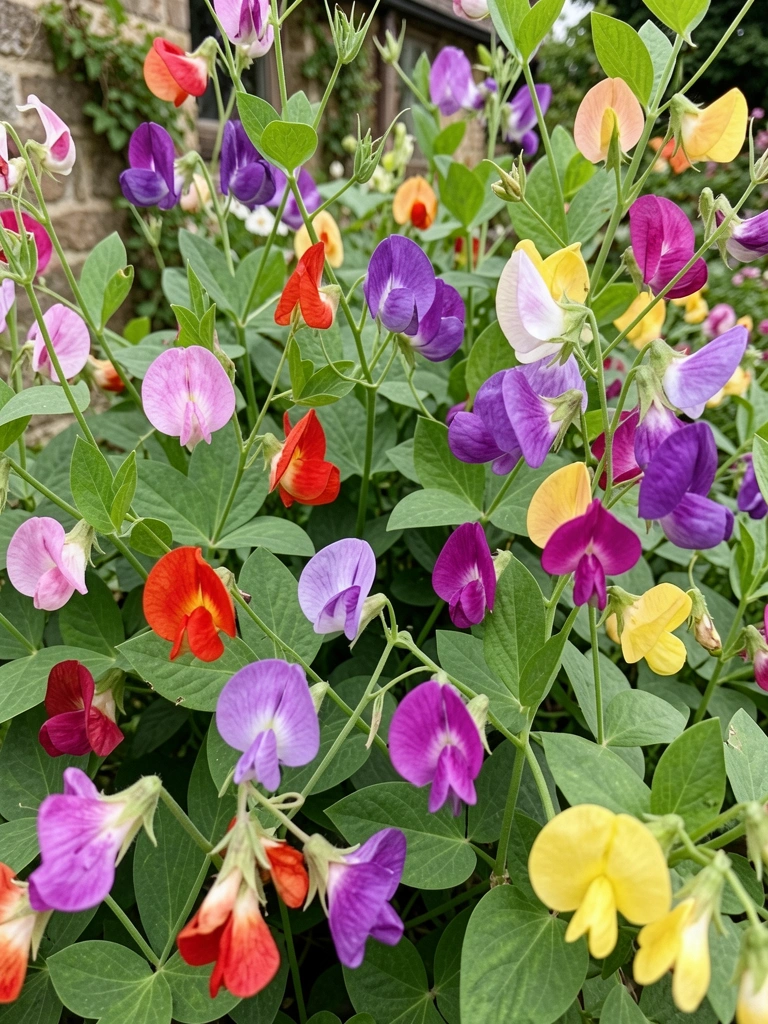
Last, sow sweet peas in gaps. They climb and color up quick.
It blooms full now. Warm, lived-in feel through summer.
Missed tip: deadhead often. Keeps fresh. Plant in drifts, not rows.
Don’t overplant. Five seeds per gap max. Room for growth.
Choosing Plants for Year-Round Interest
I pick plants that carry through seasons. Foxgloves spike early, roses hold summer, lavender lasts fall.
Evergreens like small boxwoods anchor winter. They prevent bare looks.
- Foxgloves: Spring towers.
- Roses: Mid-summer repeat.
- Geraniums: Fall tidy-up.
This mix keeps the garden comfortable all year.
Creating Soft Pathways
Paths tie it together. I use gravel or stepping stones. Curve them gently.
They guide without straight lines. Add low plants along edges.
- Mulch between stones.
- Let thyme creep over.
Feels welcoming, not forced.
Simple Maintenance Habits
Check weekly. Water base, not leaves. Snip spent blooms.
Divide clumps every three years. Replant offsets.
- Mulch spring.
- Stake tall ones early.
Stays balanced with little work.
Final Thoughts
Start with one bed. Watch it fill over a season.
You’ll see the flow build. Trust the layers.
It’s your garden now. Comfortable, yours.